01
Private moment
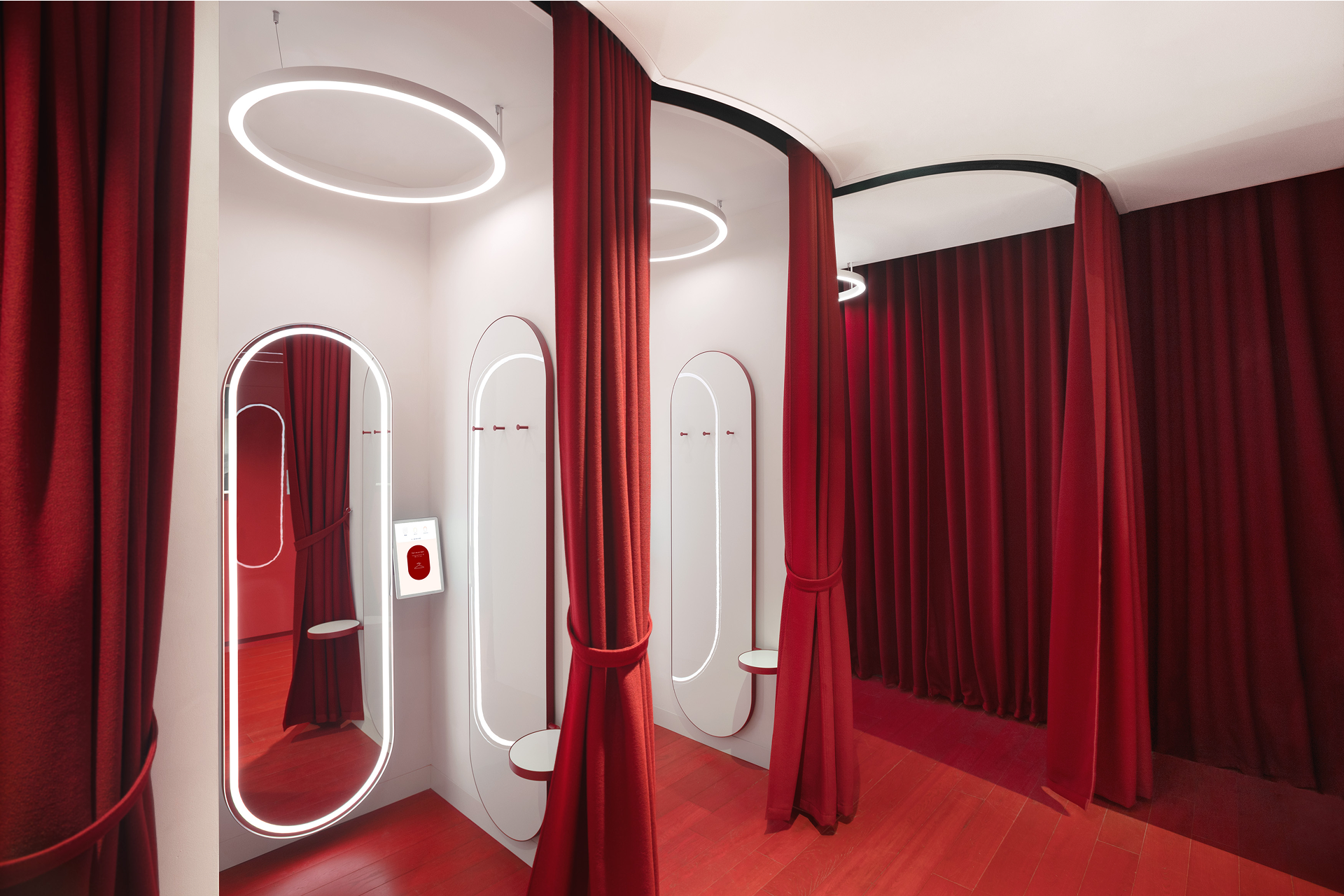
The interaction had to respect the vulnerability and focus of trying on clothes.

Store of the Future · Random Studio
I helped design and test connected fitting-room experiences across multiple countries, learning how culture, store context, staff service, and technology shape adoption.
My role in the platform
Experience design
Mapped journeys and designed interfaces across mirrors, public screens, staff tools, and phones.
Research
Observed customers and employees in stores across multiple countries and turned behavior into design decisions.
Prototyping
Tested new technology through digital prototypes, physical setups, and live in-store pilots.
Delivery
Worked with creative, technical, retail, and brand teams through iteration, installation, and validation.
The customer is standing, changing clothes, holding products, and deciding whether to ask for help. The interface had to fit that physical and emotional context. Its job was to reduce friction, not demand attention.
01
The interaction had to respect the vulnerability and focus of trying on clothes.
02
Customers, employees, inventory, and checkout all influenced whether the experience worked.
03
Screen height, lighting, reflections, curtains, product placement, and store traffic mattered as much as the UI.
We treated the fitting room as part of a wider service. Customers could identify an item, explore options, request support, build a shopping bag, and carry the session onto their own device.
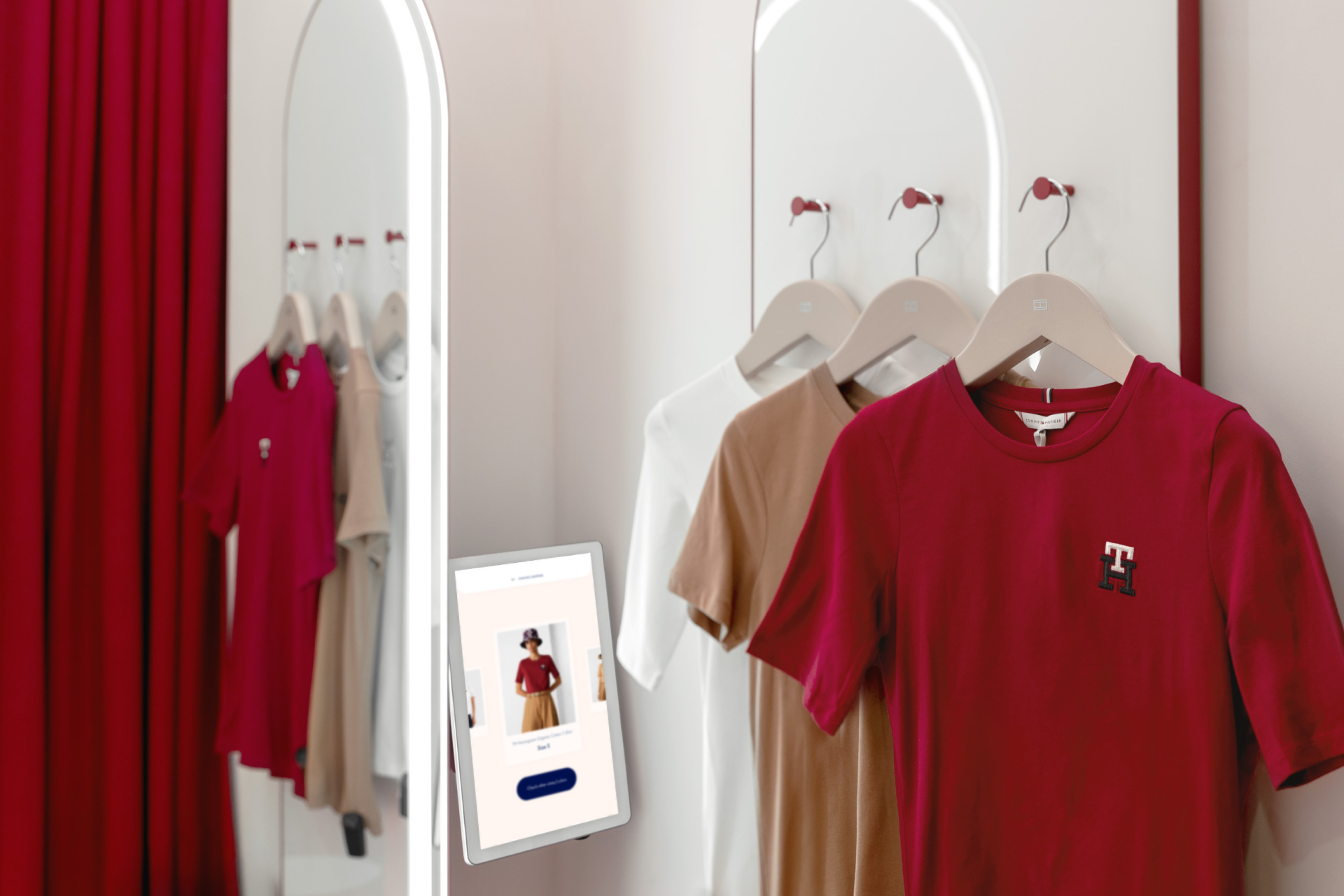
Recognize the context
Connect the item in the room to useful choices without forcing a new search.
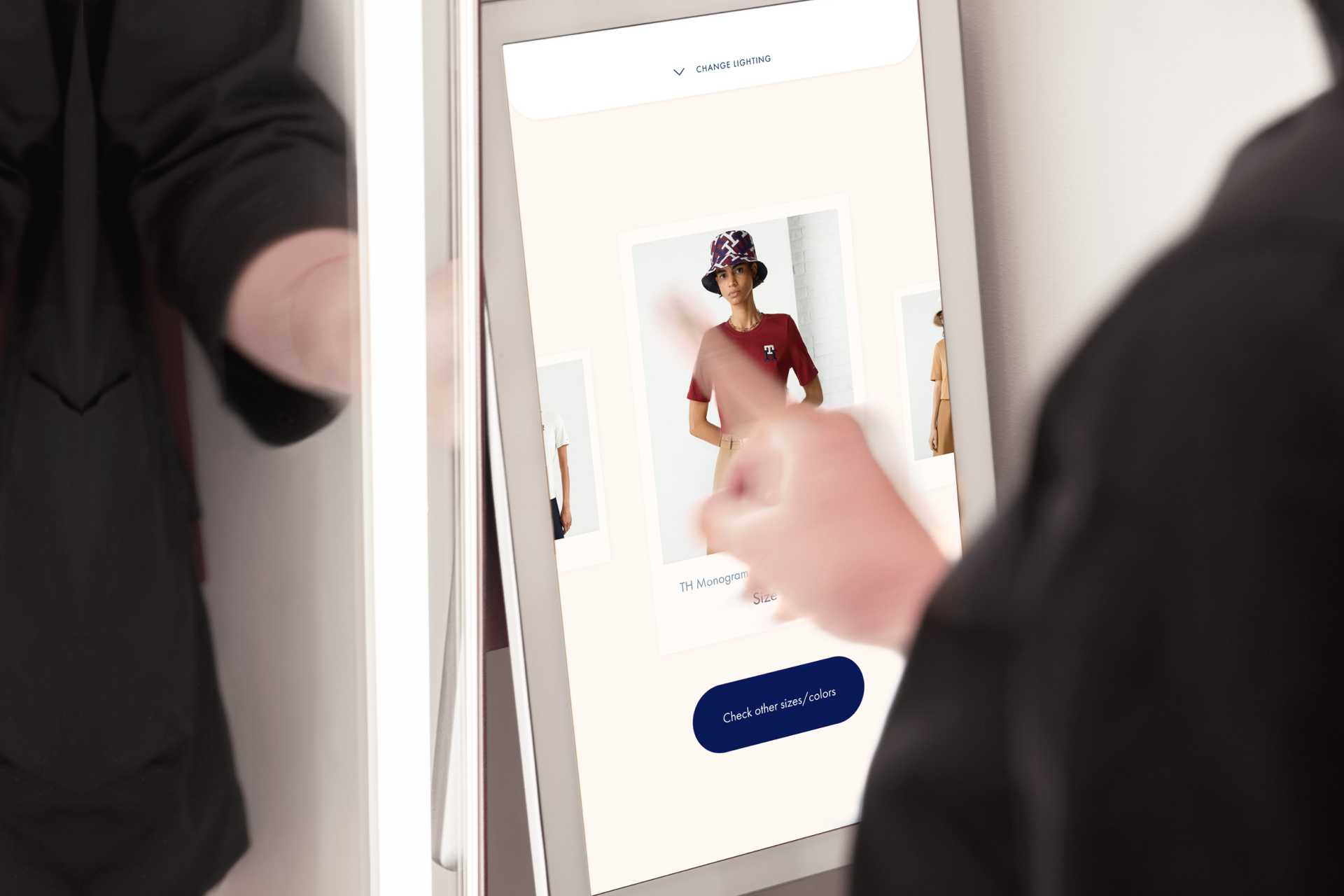
Support the decision
Make size, color, availability, and assistance clear at the moment of need.

Continue on a phone
Transfer the shopping bag through a QR code instead of trapping progress on a public screen.
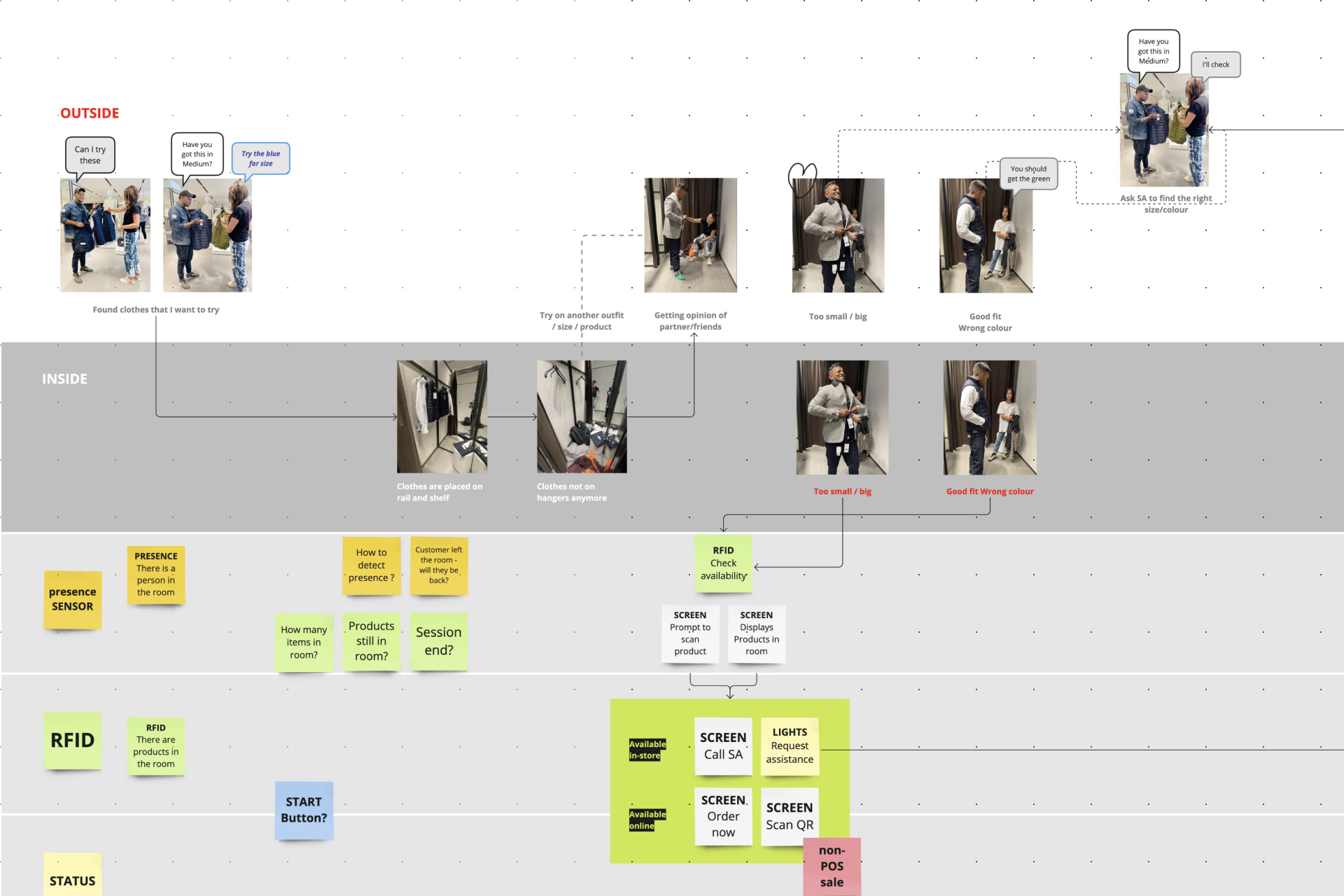
I tested and observed the experience in stores across multiple countries. The goal was not to reduce cultural differences to stereotypes. It was to see how each store, team, and customer group changed the conditions for adoption.
Could customers notice and reach the interface without interrupting the fitting-room flow?
When did people want privacy, and when did they expect support from store staff?
What encouraged someone to touch a public screen, request another item, or continue on a phone?
Which labels and instructions remained clear across markets, brands, and levels of digital confidence?
Where could a screen remove friction between the fitting room, staff, inventory, and checkout?
Which moments benefited from technology, and which were better left physical or human?
How research became action
ObserveWatch real tasks and speak with customers and store employees.
MeasureTrack task completion, drop-off, assistance requests, and structured feedback alongside observed behavior.
DecideTurn patterns into prioritized changes for the interface, service flow, and physical installation.
The work moved through journey mapping, interface design, digital and physical prototypes, user testing, iteration, and installation. A Milan pilot was installed and tested overnight so the full experience could be evaluated in its intended environment.
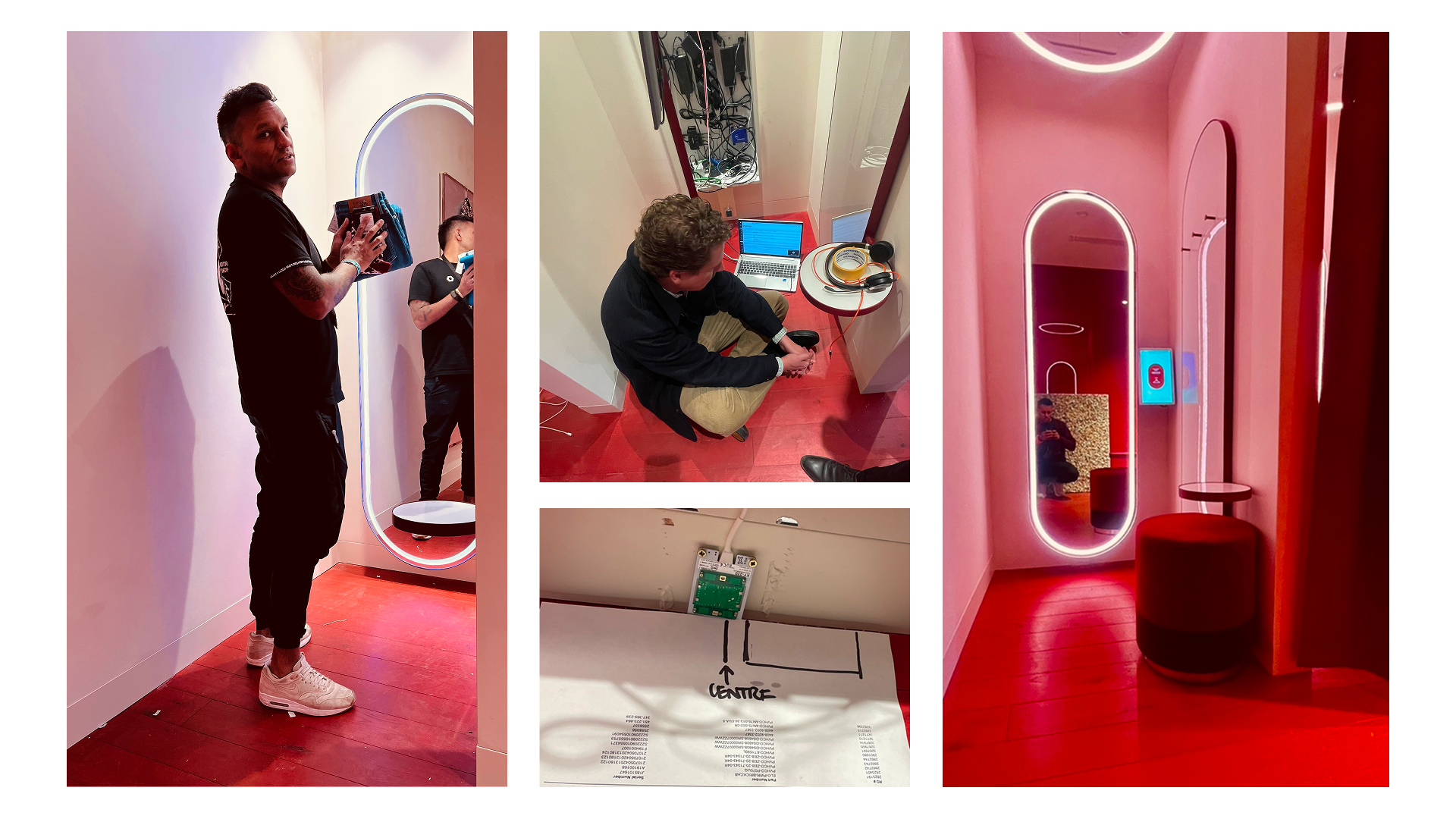
Across the 18-month Store of the Future engagement, I worked on connected experiences for Tommy Hilfiger and Calvin Klein. Shared technology needed to flex for different brands, customers, store formats, and service needs.
Help customers discover sizes and products beyond the inventory visible in one store.
Support a sensitive, highly personal fitting decision with clear guidance and brand-appropriate language.
Connect item context with relevant alternatives while protecting the focus of the in-store moment.
Design customer experiences alongside the tools and handoffs store teams needed to support them.

This work deepened my service-design practice. A digital touchpoint belongs where it removes friction, clarifies a decision, or connects a handoff. Commerce connects physical spaces, public screens, personal devices, staff interactions, and different countries. The experience has to remain coherent while the context keeps changing.
What I would bring to bol
I want to bring this approach to bol: test new technology in context, examine the quality of the interaction, and help teams decide what deserves wider adoption.
Relevance to bol
Shared project materials courtesy of the Random Studio project team. View the supporting project archive.