Fulfillment
Some theaters supported pickup. Others delivered directly to a guest’s seat. The journey needed to set the right expectation early.
Case 03 · Cross-platform transaction design
Designing a concessions journey that worked across theaters, fulfillment models, product combinations, and purchase moments.
30-second case summary
Problem
Add pre-order concessions to a large ticketing ecosystem without creating new purchase friction.
My ownership
Interaction design, responsive wireframes, prototype testing, annotations, and detailed flow logic.
Complexity
Variable menus, prices, fulfillment types, order combinations, platforms, and purchase contexts.
Outcome
45% more completed transactions, 37% conversion, and 40% revenue growth after launch.
Ordering popcorn looks simple until every theater, menu, price, device, and fulfillment model must work inside one coherent experience. I mapped the variation before defining the interface.
Some theaters supported pickup. Others delivered directly to a guest’s seat. The journey needed to set the right expectation early.
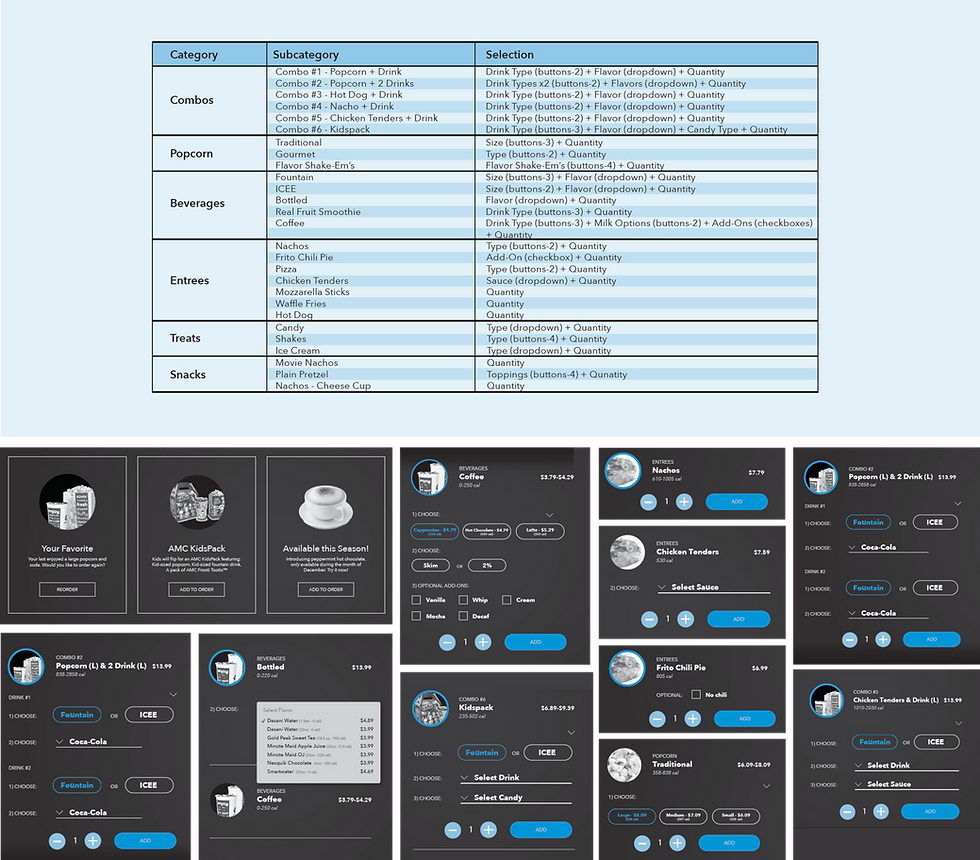
Combo prices changed based on drink type, flavor, size, quantity, and add-ons. Totals needed to stay understandable.
Every product category carried different modifiers. The interaction model had to stay consistent without flattening those differences.
Responsive web, iOS, and Android needed shared logic while respecting the strengths of each platform.
Guests could add food during ticket purchase or return later and order concessions separately.
The new feature joined a broader nine-month redesign serving a large national customer base.
I documented categories, subcategories, modifiers, quantities, add-ons, and pricing relationships. This converted a complicated operational model into reusable interaction patterns.
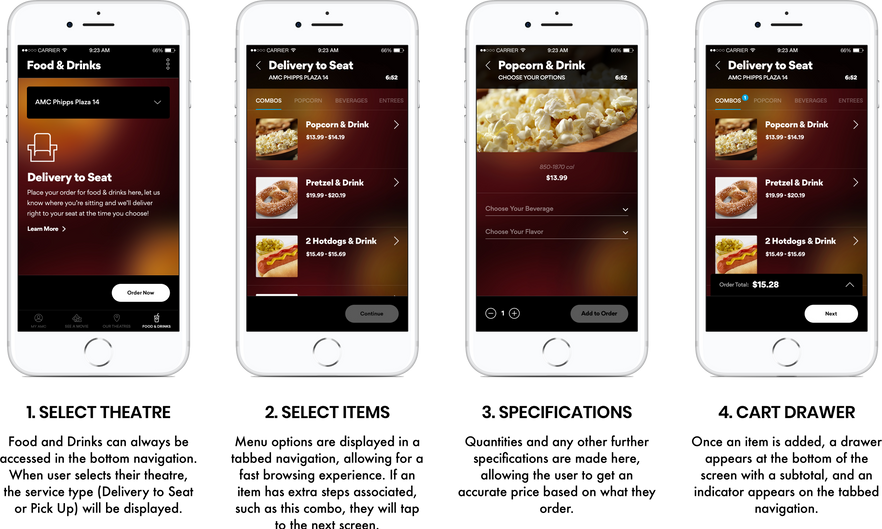
Delivery to seat and theater pickup created different expectations. The journey exposed the available service first, then guided item selection, configuration, cart review, and fulfillment.
The selected theater determined the menu, pricing, and available fulfillment method.
Guests chose an item first, then configured only the options relevant to that selection.
A persistent cart helped guests understand what they had selected and what remained to complete.
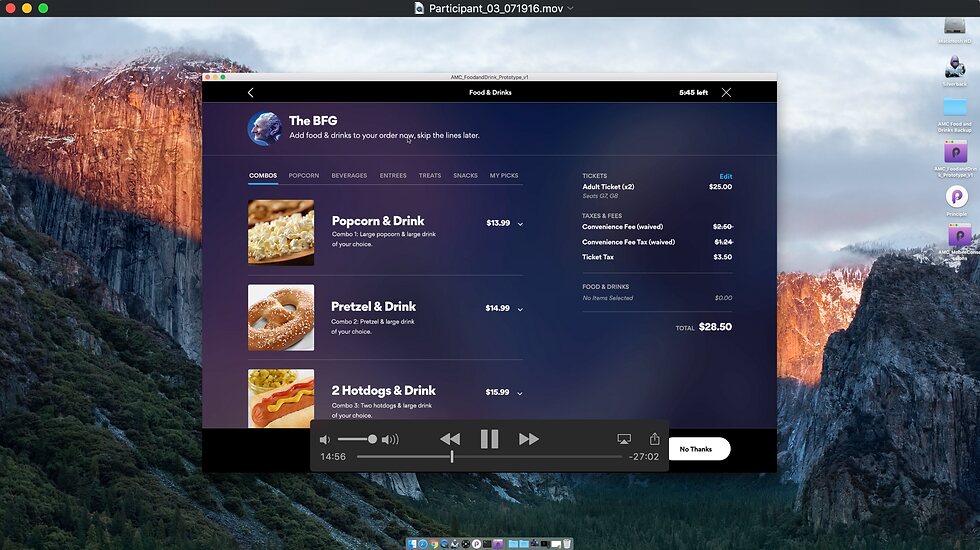
After the design phase, the team created a working prototype and tested the ordering experience with moviegoers. The research confirmed the flow was understandable and ready to move forward.
These figures were documented on the original AMC case study six months after launch.
This proposed experiment shows how I would extend the work today. It is separate from the historical AMC results.
Hypothesis
Introducing concessions at the right moment in the ticket journey will increase food attachment without reducing ticket completion.
Variants
Primary metric
Concessions attachment rate
Guardrails
Ticket completion, completion time, ordering errors
Relevance to bol